


WS Editor
Architecture / Design Firm
TOP
Dr Diane Menzies is the 2026 recipient of the IFLA Sir Geoffrey Jellicoe Award. As a Māori landscape architect, she understands landscape as the relationship between people and land. Over her career, Menzies worked for Wellington City Council, the Ministry of Works and the Ministry for the Environment, served as a commissioner of the Environment Court, and taught at Unitec in Auckland and Victoria University of Wellington. She was president of the International Federation of Landscape Architects from 2006 to 2010. In 2008, she was appointed to the New Zealand Order of Merit for services to the environment, among many other recognitions. She holds a PhD in resource management and supervises master’s and PhD students. Today she continues her work through her practice, Landcult, supporting her tribe and working on research and community-driven projects.
Here, we talk about her background and her distinct view of the profession from an Indigenous perspective.

You began at Lincoln in the early 1970s, where your teachers included Charlie Challenger, Frank Boffa and Tony Jackman, pioneers of landscape architecture in New Zealand. What do you remember from those years, and what did they pass on to you?
That was over 50 years ago, but I do remember the focus. From Charlie Challenger, it was about early historic landscape architecture: André Le Nôtre, Lancelot “Capability” Brown, William Kent, Humphry Repton, Gertrude Jekyll. What I learned later is that this was landscape architecture of rich people’s places. I think that’s something to be thought about very seriously. Much of the design work is done for those who have the money, rather than for those who live in very difficult situations and could most benefit from it. Social justice is important. That’s one thing I learned on reflection.
“Much of the design work is done for those who have the money, rather than for those who live in very difficult situations and could most benefit from it.”
Probably the key lesson from those days was that it’s about people, not only about plants and biodiversity. Old Charlie Challenger was very angry one day when I finished my work and went skiing. I couldn’t quite understand, but on reflection it would have been much better if I’d stayed in, supported others and learned from them too. Landscape is about people.
What else did I learn? Drawing in those days was so tedious, it probably put me off design work. Things are so much more swift and easy now, particularly to duplicate, with AI and many other software and platforms.
You worked for Wellington City Council, the Ministry of Works, the Ministry for the Environment, and later the Environment Court. Did the drawing board push you away from design and toward policy?
I was initially interested in nature and soils and plants, and I wanted to be outside. That was a key driver for me. Of course, you realize entirely the opposite happens: you’re in an office, and that’s where you spend most of your time. I was actually sponsored by Wellington City to do the landscape architecture course, because they wanted landscape architects on their staff.
“Designers don’t get to do the designs well unless the policy and decision-making that support them are in place.”
In hindsight, in all those organizations I was looking at landscape in a broader and broader way, and seeing policy as an instrument to achieve more than a specific design in itself. Designers don’t get to do the designs well unless the policy and decision-making that support them are in place.
Which piece of work, a policy, a project or a decision, are you most proud of?
I don’t get proud about anything. My brain works a different way, I just do it.
At Wellington City, probably the Outer Town Belt. The original Town Belt was an economic strategy to raise the value of the land inside it. My idea for the Outer Town Belt was not so much economics, but a landscape. Not a barrier, but a breathing space between one city and another. It was steep hillsides with a lot of earthquakes – better not to build there. Linking up those spaces was for recreation, but also for biodiversity and all sorts of other things. In about 1999, while I was doing a PhD at Lincoln University, I did the same thing as a volunteer with Port Hills 2000, one of the projects marking the millennium, this time, integrated with the community, farmers and philanthropists.
Another thing stayed with me. A friend in a rural area said to me, “Don’t drink the water, it makes people sick.” I found that chemical firms, or maybe farmers, had been dumping cans of unlabeled poisons into the coastal area. It became a major pollution and contamination issue. A small thing that became a large thing.
We also worked on the Resource Management Act, which is still there and still politically contentious. Policies for coastal cities, lots of projects, possibly none that were going to change the world. When you work on things, you usually don’t make a great leap, but you modify policies. I did about 200 mediations for the Environment Court, and each one may have helped people involved understand their neighbors and the policies better.
Can you explain how mediation works, in your case?
I think mediation is something landscape architects should be taught, and they were being taught it in Ramallah, Palestine, because people need to talk to their neighbors. If you’re tribal and each tribe is a village, and you want to liaise with both, you need mediation. Even a person with teenage kids needs mediation to work out an agreement both can live with.
The concept behind mediation is that there’s not just one answer, and people work out a solution themselves. The mediator keeps it moving, keeps people looking at options that expand what they’ve been thinking. Often people can only see the dispute, not how to resolve it. If they find the solution themselves, they’re more likely to support it and live with it, rather than have a court’s decision imposed upon them.
Mediation ranged from planning policies people were appealing to, to neighbors at war, which I think is even worse, because it’s about relationships. It usually is about relationships. Mediation is about helping people see beyond a dispute to reconciliation.
At the Environment Court, what I found a huge privilege is that in a case you hear from experts on all sides: air, noise, worms, biota, local Māori values … Or people may be unhappy about the noise from a kindergarten next door, but if you record it and compare it with a cage of budgerigars, sometimes it’s pretty much the same. Some of what people are unhappy about is not the thing itself, but the perceptions that go with it.
How is it to be a Māori landscape architect, in a profession that often looks at landscape through a Western lens?
When I started, there were very few Māori in the profession; perhaps I was the only one. People didn’t see me as a Māori landscape architect, just as a landscape architect, as I had no chin marking at the time. Even that was hard enough to explain: what is that? Landscape architects were people who take plants out of plastic bags, green the buildings, and that’s it. So the emphasis was on what landscape architecture is, rather than on the values lying behind it.
“When a culture takes up landscape architecture, I don’t think it should automatically take on the values it originated from.”
That is really the key. Then, and even now, much of landscape architecture follows Western values. Many cultures don’t have the word landscape in their vocabulary, and the term itself comes from Europe. When a culture takes up landscape architecture, I don’t think it should automatically take on the values it originated from. It should look at its own values and apply landscape architecture in those terms.
A European conception of landscape, to my understanding, is that people are separated from it. Landscape is perceived as an object. From an Indigenous perspective – and I can’t speak for all Indigenous people, I can’t even speak for my own people because I’m not empowered to do that – land is part of an integrated whole. People are not superior to land, or animals, or anything else. They are custodians of land rather than owners or purchasers. Worms and insects and everything else are just part of it.
Traditionally, before you cut down a tree to use it, you would say an invocation to the tree. Underlying this was respect: respect the tree, respect nature. If you’re going to take an animal’s life, respect the animal as well, and take it for survival and food rather than recreation. Hunting for fun is kind of a horrific idea. And understand that if you cut down a tree, you may change a whole ecosystem.
“Being a Māori landscape architect, I think, is realizing there are a lot of barriers for Indigenous people who have been colonized.”
Perhaps landscape architecture with Indigenous knowledge is about understanding relationships between people and land, rather than technical things like software and policies. Being a Māori landscape architect, I think, is realizing there are a lot of barriers for Indigenous people who have been colonized, in Latin America and in the four countries colonized by Britain: Australia, New Zealand, Canada and the USA. Many Indigenous people lost their land completely. Their survival over thousands of years depended on their knowledge of that landscape, from which they are separated now. So regaining things like food sovereignty, managing our own food systems rather than automatically going to a supermarket, is becoming much more important, and the landscape architect’s role in that.
You studied te reo, Māori language, later. How come?
My mother was what we might describe these days as a white supremacist. Her view was that we should all be one together, Māori and European people, Pākehā, and all speak the same language, with the implicit assumption that it would be English. I found out I was Māori when I was about fifteen, from my cousin. My mother said never to talk about it, that my father would be ashamed. It’s sad, really. No culture is anything to be ashamed of, the contrary.
I only started learning Māori language and customs when I was working at the Ministry of Works, which ran courses on culture: what is Pākehā culture, what is Māori culture, and how do we work together? That’s when I started understanding culture, my role in it, and how important it is. I still wouldn’t say I speak the language, though.
If you are comfortable saying, what does your moko kauae mean to you, and what does it tell people about where you come from?
Moko is the term for the skin markings; kauae is the jaw, so it’s the marking on the jaw that only women have. It is your tribal marking, so it tells what my tribe is. I affiliate with Rongowhakaata iwi, a tribe on the eastern coast of the North Island. You can see the arrow going upwards; that means you’re the first in the family, the eldest. It also reflects the expertise of the person who did it, who we call a tohunga, and their knowledge of the culture of the people they work for. For me, it is an affirmation of culture. It’s in your face. You can’t miss it.
“With moko kauae, there’s no doubt. Suddenly, I was much more aware of racism in New Zealand.”
It wasn’t a common practice, and it still isn’t, except in the area where I live. In the main cities, people still ask me what it is. My friends at Unitec, with whom I was doing karanga, the traditional call by women, were having a moko kauae ceremony and asked me to be part of it. I always thought I was too pink or that my language was not good enough. Then, as a surprise, I received the senior award of Ngā Aho, the national Māori designers network: Te Kāhui Whetū, which means a collection of stars. I was the first woman to receive this award after four men. I thought, if they see me as having that equality, why should I say I couldn’t accept a moko kauae?

There were other reasons why I didn’t have it earlier. Fifty years ago, there were very few skilled people to do it. There was a law, in the early 1900s, banning tohunga, Māori skilled people. It was aimed at medicine, but this was another cultural skill nearly lost through laws intended to assimilate Māori. Children couldn’t speak Māori in schools, or they were beaten for it. And of course, land: I think 270 different pieces of legislation impacted Māori.
Previously, I probably wasn’t perceived as being Māori. With moko kauae, there’s no doubt. Suddenly I was much more aware of racism in New Zealand. People are not so aware of the systemic racism that exists strongly here.
In Aotearoa, rivers and mountains have been granted legal personhood, yet you speak of systemic violence. Where do you see it?
I’ve been working with Pūrangakura, a research group that is almost solely Māori, on a government-funded project about young people’s access to housing, with an emphasis on Māori. The survey was run by young people, and I helped them with my research experience. They surveyed 1,000 people, and many had difficulty renting because they were Māori and because of the assumption that they didn’t have any money.
That has led to a paper I’m finishing with a young colleague on racism and discrimination in housing. Those young people often found, not everybody, of course, that the accommodation available to them was the worst: cold, damp, mouldy, which can cause health effects, particularly with kids there. Those were the places nobody else wanted, so they were the ones available. Sometimes, the systems are set up to do exactly that, but often, it is the landlords and the rental system too. So yes, there is systemic violence through governments, local governments, and those who feel they might be missing out if Māori get something.
I think it’s a lack of understanding, actually. Politically, it’s often used as a way of dividing. Unfortunately, it’s gotten a whole lot worse in New Zealand, rather than better. Australia, New Zealand, Canada and the USA were, I think, the only countries that opposed the United Nations Declaration on the Rights of Indigenous Peoples at first. Gradually each one, rather quietly, signed it. In the last few years, parts of the New Zealand government have suggested backing out. I’m not sure how you do that anyway.
I think it’s a case of working together rather than separation. The more you separate, the more those differences grow. Working with community, with farmers, is what landscape architects are trained to do, and that’s where mediation helps: standing in each other’s shoes. Whether it’s managing water or protecting areas while living with particular policies, everything’s interconnected.
You are the first Indigenous recipient of the IFLA Jellicoe Award. What do you hope this signifies?
I’m hoping it will be an affirmation to Indigenous landscape architects, a sense of doors opening. At first it was hard to find Indigenous landscape architects elsewhere, and I’m really pleased that it is developing now. A small Indigenous group, which will get bigger, is starting with people from the USA, Canada, Australia, Guatemala, and other places. The other thing is the International Landscape Convention, which is being worked on through IFLA. Alongside the Council of Europe’s landscape convention, it’s another way of addressing landscape that really aligns with Indigenous values. The thought at the moment is that landscape is the relation between people and their place, their territory.
“Having other cultures, rather than one prevalent way of looking at things, is vital. It is, I think, a platform for survival.”
There has been a lot of discussion about the value of Indigenous knowledge, particularly for wicked problems like climate change. Indigenous people have generally lived in an area for a very long time, and they understood how climate works, how things change, and what that means for survival, for finding food. That is the importance of Indigenous knowledge of plants and of systems, which might include the cosmos, the moon, and their interrelationship with everything.
This has been taken up, in some cases, in an instrumental way: take that bit of knowledge, but forget about the peoples whose knowledge it is. That’s a sad approach. And that knowledge may not be used in the right context anyway. It’s their knowledge, not something to be grabbed like buying a house or land. Indigenous people may well be very happy to share their knowledge and help address the problems everybody is facing, but it needs to be done with respect and understanding.
In some countries, Indigenous people may need financial resources to get the qualifications to practise, so that support is important too. Having other cultures, rather than one prevalent way of looking at things, is vital, because it gives different ways of thinking, designing, planning, and managing. It is, I think, a platform for survival.
You lectured at Unitec and Victoria University. What did you want your students to take from your classes?
I taught resource management, how to write policies, and to appreciate systems. It’s not just one park; that park relates to other aspects. Seeing the bigger picture with anything you do. And that it’s about people as much as about place and object: people and relationships, relationships to land as well.
From my experience at the Environment Court, I asked the judges if we could run a mock hearing as part of the course, with the students giving evidence before a real judge and sometimes real commissioners. That way, their first time in court wasn’t a real case.
Also, collaboration among students is really important, because landscape architecture is such a small field. A graduate working for a local government might be the only landscape architect there, so keeping contact with their group gives them backup when they have doubts.
The profession should do the same. I know practices are competitive, but sharing knowledge makes sure people are safe and able to do their jobs properly.
I still supervise and examine master’s and PhD students. I’ve focused on Māori and Pasifika students, so that they have the help I think they should have, from somebody of their own culture.
What else are you working on now?
I’m putting a lot more time into my tribe, my iwi. I’ve come to live here, which I had never done before. On the land I’m the caretaker of, I’m planting a mini forest. I’ve planted 3,000 trees in the last two years. They don’t all live, of course. I’m learning what will thrive, anticipating changes and droughts. It’s for biodiversity, and also a landscape marker, on the corner of a state highway and the road into the main tribal village. A marker for the future, a small legacy.
I also do project management for my marae, a smaller community within the larger tribe: upgrading buildings and facilities, and sewage, which I never thought I’d be doing again. And I have a research project, with a year to go, on transferring digital technology through the construction industry.
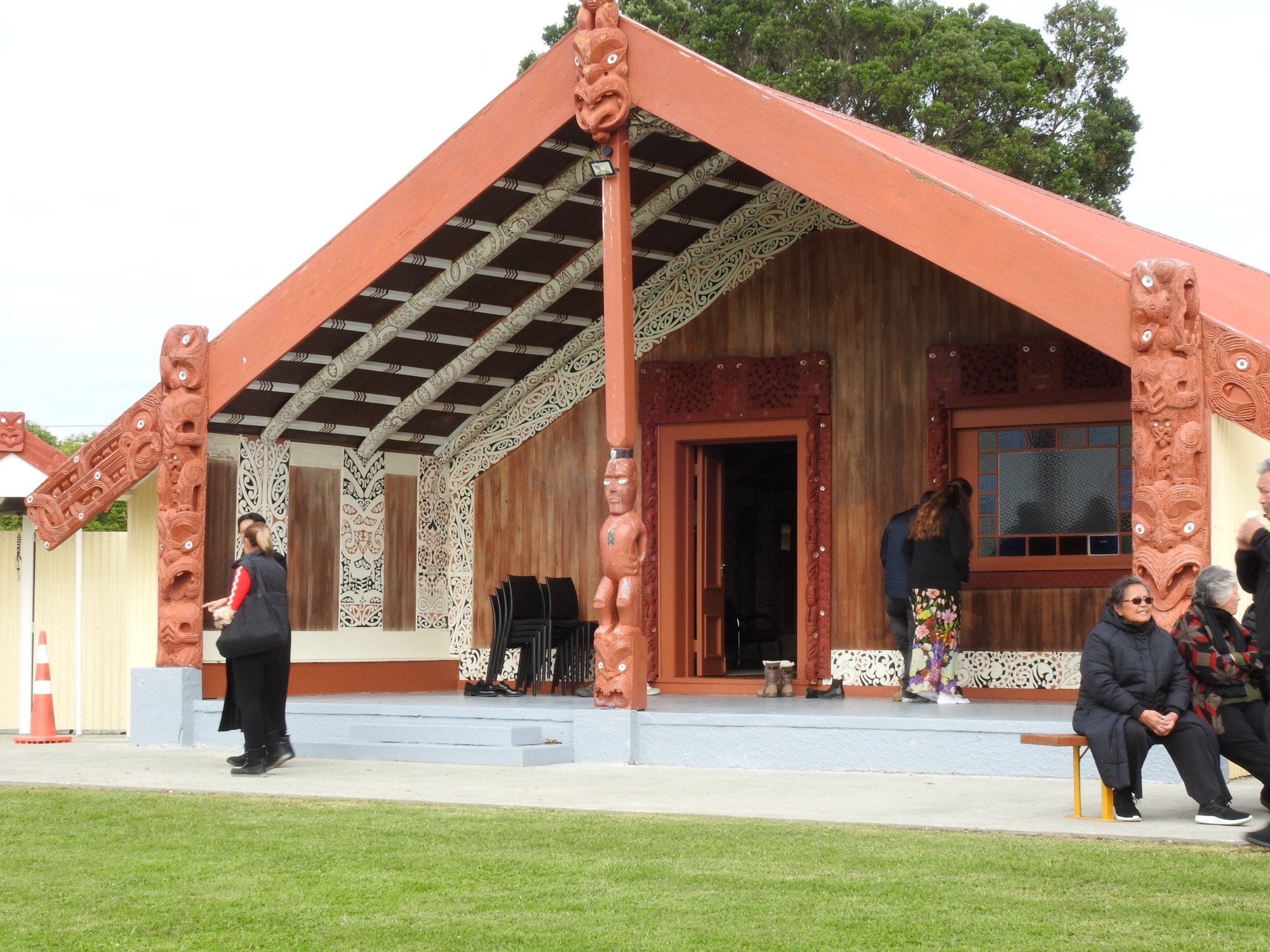
The key one for me now is much better catchment management of the river. We introduce ourselves by our mountain, a sign of longevity, and our river, which is the health and vitality of the people. I’m sorry to say the river I associate with looks like a drainage ditch, totally polluted with silt. I want to see that changed, or at least work towards it. It’s a very long-term aspiration, and I hope it can be done with the farmers, the local government, and local Māori.

Copyright © 2022 WaSpeak.com, Shanghai & Melbourne, All Rights Reserved.
Privacy. Terms of Use.ICP 2022000905